How to Read the IICRC S500 Correctly: 5 Most Misunderstood Words Explained
Restoration
3 min read
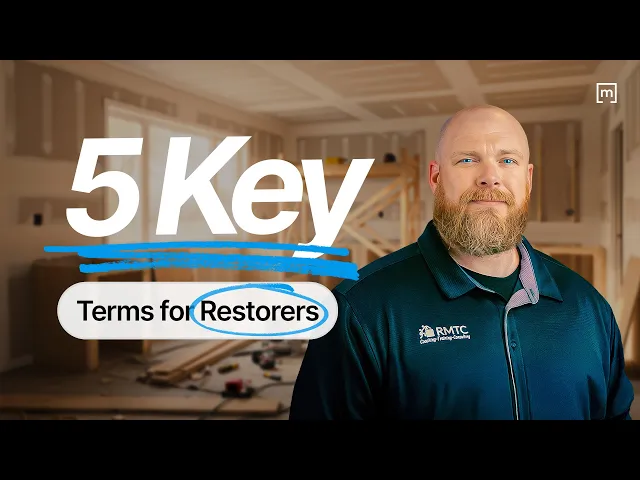
If you’ve ever been unsure whether something in the S500 is a suggestion or a legal must‑do, you’re not alone. Greg Anderson, an IICRC‑approved instructor, says most of the confusion around the standard comes down to five words. Here’s what they are, what they actually mean, and why getting them right is critical in the field.
The 5 Words That Can Change a Job
Greg breaks it down simply:
🙂“Shall” = mandatory. If the S500 says you shall do something, it’s non‑negotiable. Whether it’s a law of nature or industry rule, it’s enforceable. Violating a “shall” puts your job—and your liability—at risk.
🙂“Should” = standard of care. Not optional. Not a nice‑to‑have. If the S500 says you should do something, you do it. In legal terms, it’s what’s expected of a competent professional. If you skip it, you better have iron‑clad documentation explaining why.
🙂“Recommended” = strong suggestion. Usually the best course of action, but not required. If you choose not to follow a recommended step, you need solid reasoning. Think of it as industry best practice—valuable, but flexible.
🙂“May” = permission. You’re allowed to do it, but you don’t have to. It gives you room to make the call based on context.
🙂“Can” = possibility. Something is technically or physically possible. Not a recommendation, not a rule, just an FYI.
Why It Matters on Every Job
Understanding these terms isn’t just for passing a certification. They define what you’re accountable for on every water restoration job. Miss the difference between “shall” and “should” and you could end up with rejected claims, liability exposure, or worse.
Field‑Use Checklist You Can Use This Week
Here’s a practical checklist you can implement immediately:
Highlight every “shall” and “should” statement in the S500 when scoping a job.
Use documentation (photo, note, voice memo) to explain any deviation from a “should” step.
Train your techs to spot those key words when doing assessments and scoping.
Push back on software or TPAs that treat “may” or “can” as if they were “shall.”
Roll this into your job‑start onboarding today—make the team aware of what those five words mean.
For additional information, check these these magicplan blog posts:
📘How to Write Restoration Estimates That Tell the Complete Story
📘Standard Operating Procedures (SOPs) Every Restoration Company Needs
So why does magicplan matter?
When you’re documenting to match the S500, tools like magicplan make it easier to capture what’s actually there—including photos, scans, notes tied to each sketch. So your estimate isn’t just accurate—it’s defensible.
In other words, you’re aligning your documentation and scope with what the standard expects (i.e., when you “shall” do something you have proof you did it).

Do you want to discuss this or other topics further? Connect with other professionals on our magicplan Community!
Share
The 5 Words That Can Change a Job
Why It Matters on Every Job
Field‑Use Checklist You Can Use This Week
So why does magicplan matter?

Silvia Corvi
Community Manager