Train New Restoration Techs to Scope Water-Damaged Sites Like Pros (4 Strategies to Try)
Restoration
4 min read
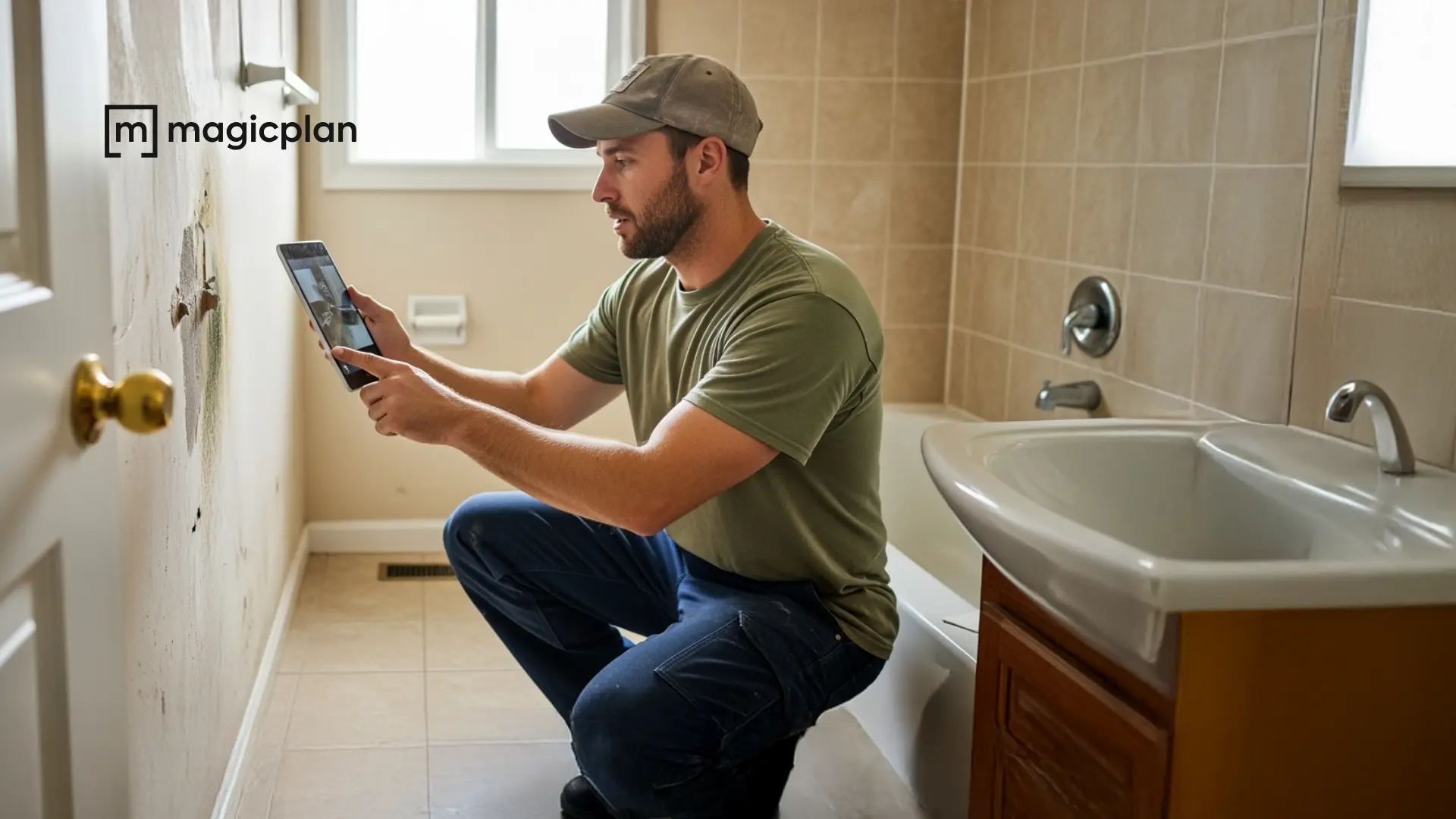
You already know that the quality of each estimate lives or dies on what happens during the first site visit. When a new technician learns to observe like an estimator and scope like a project manager, you stop bleeding profit on missed line items and start getting consistent, defensible jobs.
Why Good Scopes Start in the Field
If scoping feels like a back-office problem in your company, it is usually because the field did not give your estimator a fighting chance. An office-based estimator can only work with details and visuals that were captured on site. If those inputs are incomplete, your estimator either guesses, wastes time chasing clarifications, or writes a conservative scope that leaves money on the table.
Therefore, new technicians must understand that scoping is not an “optional task”; it is part of doing the work correctly. You can frame it for them this way: every job tells a story, and their job in the field is to collect the chapters in order so you can finish the book at the office. When they understand that their documentation directly controls how much the job pays and how smooth the claim goes, they start treating scoping as a core skill, not a chore.
That’s why appropriate training is important. Here are four effective strategies to try.
Strategy #1: Teach Structure Instead of Letting Them “Wing It”
Most rookies will default to what they notice first: most likely the visible damage in a room. And without a structured approach, they may miss all of the boring but billable details — insulation, trim, inside closets, contents to be moved, protection required, and so on. The fastest way to fix this is to train them to use various checklists for different types of water-damage job sites. Over time, those checklists will become the “scaffolding” your techs use to build new scopes.
It also helps to review common line items in plain language during ride-alongs: what each one means, where it applies, and what visual cues should trigger it in their mind. This will help them identify and document all billable work that needs to be completed.
Strategy #2: Emphasize What “Good Scope Habits” Look Like in the Real World
When you think about your best estimator, you probably picture someone who is calm, systematic, and a little bit obsessive. That same mindset is what you want to build in your new technicians. So, rather than treating scoping as a single task, break it down into small, trainable habits.
A strong habit set for a rookie tech might look like this:
First, they move room by room in a consistent order — front to back, or top to bottom — never jumping around the house.
Second, in each room they collect a complete package, including basic measurements, initial visual documentation from multiple angles, close-up photos of affected materials, initial instrument readings, and quick notes about what was damaged and how.
Third, they note anything unusual: access issues, pre-existing damage, homeowner requests, or constraints that could affect pricing or productivity.
These habits are much easier to train if you make them visible. Do a short debrief with new techs after each of their first few jobs. Pull up their photos and notes, walk through the job as if you are the estimator seeing it cold, and ask them to spot what is missing. That reflection loop is where sloppiness turns into discipline.
Strategy #3. Help Techs Understand Different Categories and Classes of Water
Water-loss categories and classes can feel abstract in a classroom. But in the field, they become ideal training frameworks. Categories help a new tech understand how dirty the water is; classes help them understand how far the water traveled and how much building material is wet. Together, they shape the scope and the conversations with adjusters and homeowners.
Teach categories first in simple terms:
Category 1 is clean, from a sanitary source like a supply line or tub overfill.
Category 2 is gray, with significant contamination — think dishwasher discharge or washing machine overflow.
Category 3 is black water: sewage, flooding from outside, or anything that clearly poses a health risk.
When your techs can quickly identify the category of water at a water-damaged job site, they will better understand when materials must be removed versus cleaned, how aggressively to protect unaffected areas, and what PPE and procedures are non-negotiable.
Next, cover the four classes of water damage:
Class 1: Minimal absorption
Class 2: Significant absorption into materials
Class 3: Water has wicked up walls or saturated ceilings
Class 4: Specialty drying situations involving materials like plaster, hardwood, or stone
When rookies learn to connect what they see to these specific classes, they start to think more like estimators, automatically linking severity to the scope of demolition, reconstruction, equipment, and monitoring.
Strategy #4: Make Their Learning Curve Easier with magicplan
The training becomes easier when your field software nudges technicians through the same structured thought process you are trying to teach. That’s why magicplan sketch app software has built-in scoping tools that are designed around that kind of guided workflow, so your rookies are not left staring at a blank notepad.
From the moment they start a project on their phone or tablet, they can create a new scope document and give it a specific name. Then they are encouraged to move room by room, sketching or scanning each affected area so that scope items are tied to specific spaces instead of being dumped into generic job notes. This is helpful for developing proper documentation.
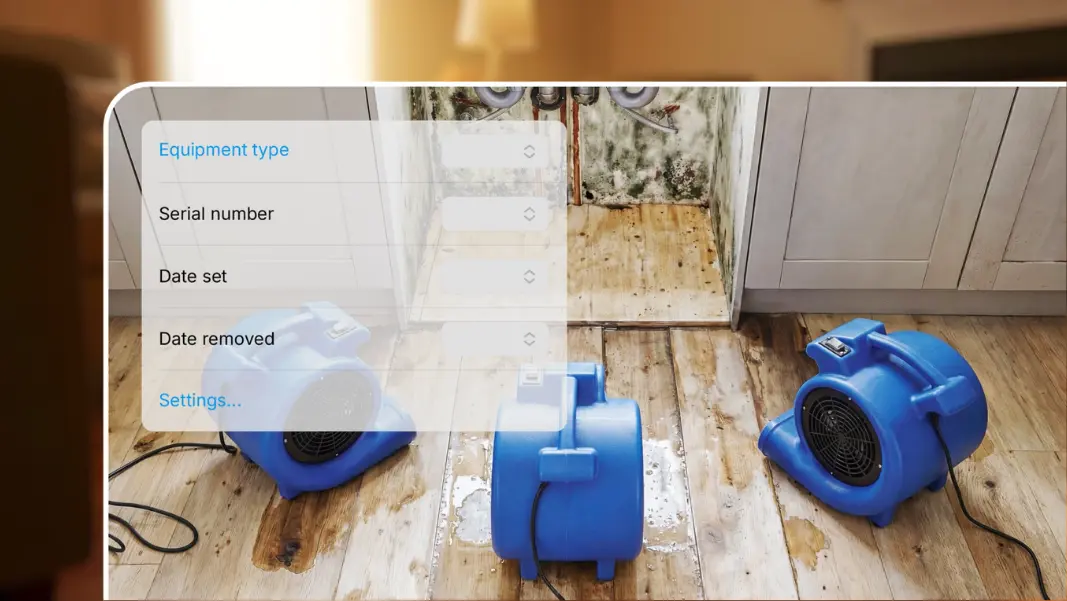
Within each room, they can select line items from libraries that mirror your estimating platform, including items mapped to Xactimate software codes. That means when a tech adds a line for removing wet baseboard, setting equipment, or applying antimicrobial, they are choosing from structured options rather than free-typing vague descriptions. Photos and notes can be attached directly to those lines or to the room itself, so later you are not hunting through a camera roll trying to remember which wall or cabinet a photo is showing.
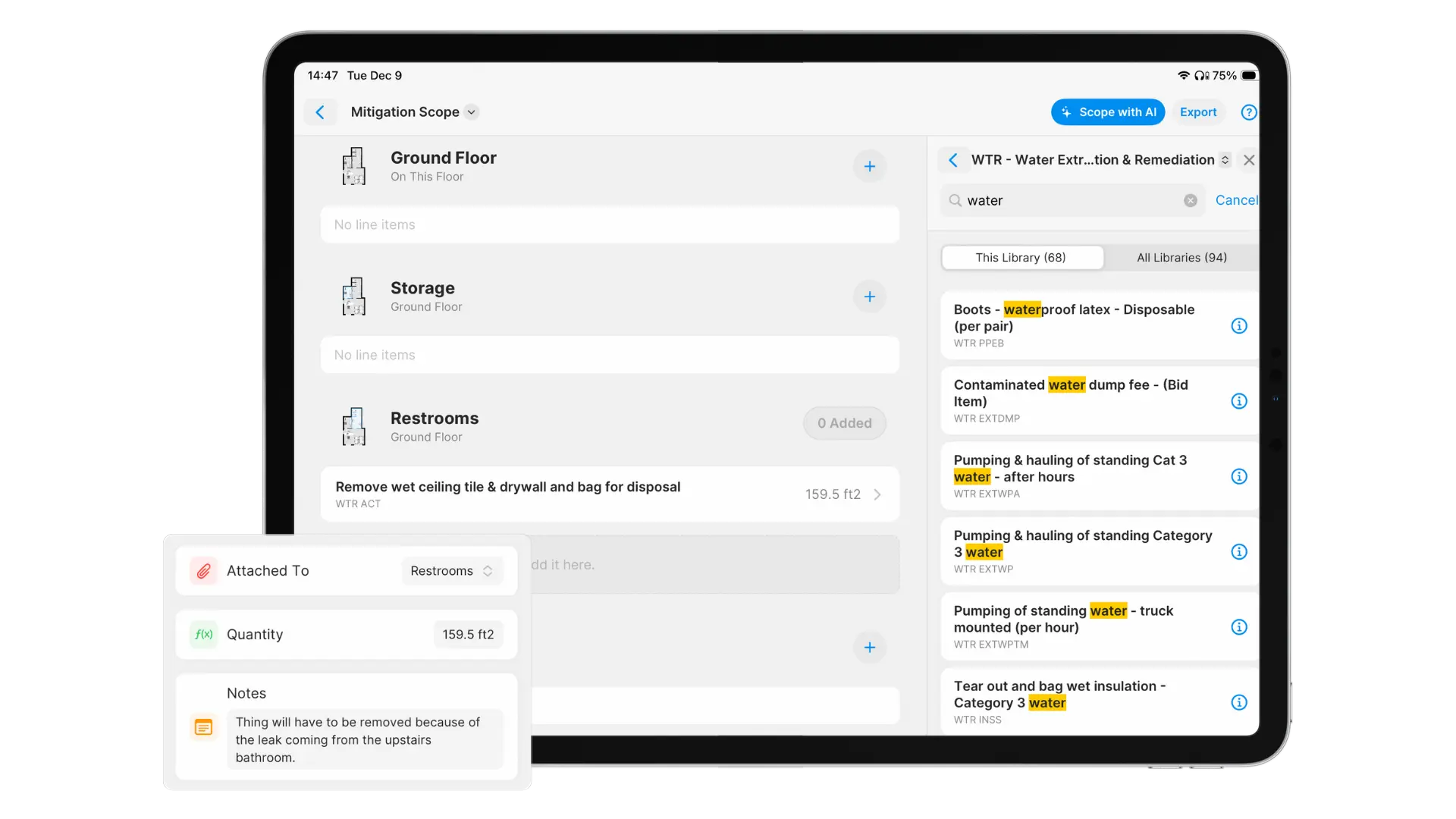
Once the scope is captured, your techs can have magicplan restoration software generate and instantly export a detailed ESX file that meets Xactimate software requirements. That allows your estimator to import it into Xactimate and build the estimate without re-entering data.
Oh, and another app update is about to be launched: As magicplan continues to evolve, it will soon be possible to export the scope in the ESX, so the line items of the SOW will be transferred to Xactimate estimating software along with the sketch, photos, captions, objects, affected areas, etc. This tightens the link between field documentation and final estimate even further.
Begin Using These Strategies with Your Next Tech Hire
Training new technicians to build better scopes is really about building better habits: seeing systematically, documenting completely, and understanding what the loss severity demands. When you combine clear field training with a structured scoping app that reinforces workflow patterns, you shorten the learning curve and protect your margins. Over time, your rookie techs stop being your biggest documentation risk and become reliable contributors to accurate, profitable estimates.
BONUS TRAINING TIP >>> Have New Techs Read This Article About What to Include in Water-Damage Reports
Share

Silvia Corvi
Community Manager