When and Why IICRC Creates New Standards in Restoration
Restoration
3 min read
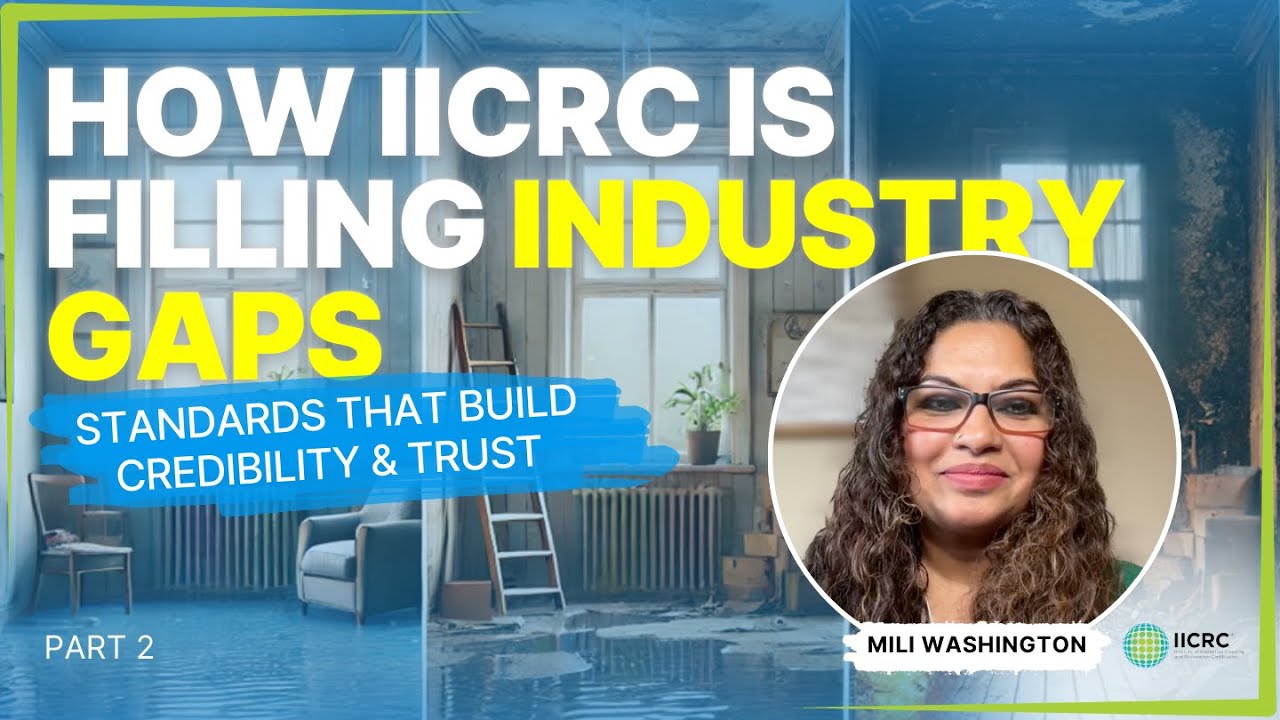
Watch the video on YouTube - Most folks in the restoration field know IICRC standards are the backbone of how we do our work. They guide our decisions, shape our training, and often end up being the thing that backs us up when jobs get tricky — or legal. But how does IICRC decide when it’s time to write a new standard?
I talked with Mili Washington, Standards Director at the Institute of Inspection Cleaning and Restoration Certification (IICRC), to dig into the real process behind creating a new standard — and how regular people in the field can actually have a say in it.
What Triggers a New IICRC Standard?
It’s not something that happens often — and for good reason. Creating a new standard is a massive undertaking. It takes years, it involves a lot of people, and once it starts, there’s no turning back.
A new standard usually comes about when there’s a clear and ongoing gap in the industry — a part of the job where folks are looking around for guidance and realizing, “There’s nothing written down for this.”
That’s exactly what happened with areas like trauma and crime scene cleanup or fire and smoke damage restoration. The industry kept running into these situations without a solid reference point. Over time, it became clear that something official needed to exist.
It’s not like someone just decides over the weekend that IICRC should write a new standard. The organization hears about the gap repeatedly, from multiple sources, and once it reaches a tipping point, they’ll say, “Okay — it’s time.”
But if there’s already a solid standard out there from another organization, they won’t reinvent the wheel. They’ll reference it instead. Harmonizing across the industry is important — it keeps things consistent and avoids unnecessary overlap.
Why They Don’t Just Write One for Everything
New standards aren’t taken lightly. They require an application through ANSI, years of work by a dedicated committee, and a mountain of public feedback and revisions.
IICRC is careful about what it takes on. They only move forward when the gap is real and the need is strong. That’s why their library of standards has grown gradually, not all at once — each one exists for a reason.
How to Get Involved in the Process
You don’t need to work at IICRC to help shape a standard. In fact, it works best when people from the field — folks who do the job day in and day out — get involved.
There are a few ways to do that:
Join a Consensus Body
This is the core group who drafts the standard. It’s a serious commitment: weekly meetings, homework, and years of work. But it’s the most direct way to help build something from the ground up.
Be a Public Reviewer
When a draft is ready, it gets posted for public review. Anyone can download it and leave comments. And here’s the key: every comment has to be addressed. Even if the committee disagrees, they can’t just blow it off — they’ve got to explain why.
Volunteer as a Non-Voting Member
This is a way to stay in the loop and contribute feedback without the full-time commitment. You may get tapped if a spot opens or if your expertise is needed on a specific section.
Getting involved means you get to have a say before the standard is finalized. Otherwise, you’re on the receiving end once it’s published — and by then, it’s set.
What’s Coming Down the Pipeline
Right now, there are a handful of new standards in development that are worth keeping an eye on:
Cleaning and maintenance of commercial buildings (S400) — a base cleaning standard that surprisingly didn’t exist before.
Fire and smoke damage restoration (S700) — covering structural fire damage.
Drug residues and chemical waste cleanup (S900) — addressing a growing need in today’s environment.
Built environment cleaning for infection control (S410) — spun off from the general cleaning standard.
Hard surface inspection standards (S220) — including subfloors and substrates.
These are being created because there’s clear demand in the field. They’re not just paperwork — they’re meant to help pros on the ground do their jobs better, safer, and with more clarity.
Why It’s Worth Following the Standards
IICRC standards aren’t laws. They’re voluntary consensus-based standards. No one’s going to fine you for ignoring them. But over time, they’ve become the default — what clients expect, what other pros follow, and what gets referenced when things get sticky.
They stand up in court. They’re used by expert witnesses. And if you’re ever in a situation where you have to explain or defend your work, being able to say “I followed the standard” carries real weight.
It’s not about claiming perfection. It’s about having a clear, documented process behind the work you do — and that goes a long way in building trust with clients, insurers, and even your own crew.
Learn more: How IICRC Develops Industry Standards for the Restoration Industry
Staying in the Loop
If you’re interested in giving feedback during public review, or want to be notified when a new standard’s in the works, just shoot IICRC an email at standards@iicrcnet.org. You’ll get alerts when drafts go live, so you can weigh in before anything gets finalized.
There’s also a standards subscription site that gives you access to all current and historical standards. If you’re running a team or training new hires, that kind of access is worth its weight.
Creating a new IICRC standard isn’t fast and it isn’t easy. But it’s done right — with input from the people who actually do the work. If you want your voice in that room, now you know how to get there.
READ MORE:
ANSI/IICRC S500: Past, Present, and Future of Water Damage Restoration
Share
What Triggers a New IICRC Standard?
Why They Don’t Just Write One for Everything
How to Get Involved in the Process
What’s Coming Down the Pipeline
Why It’s Worth Following the Standards
Staying in the Loop

Benjamin Brown
Leiter Vertriebsakquise