6 Things Holding Back Your Restoration Business (And What’s Changing)
Restoration
4 min read
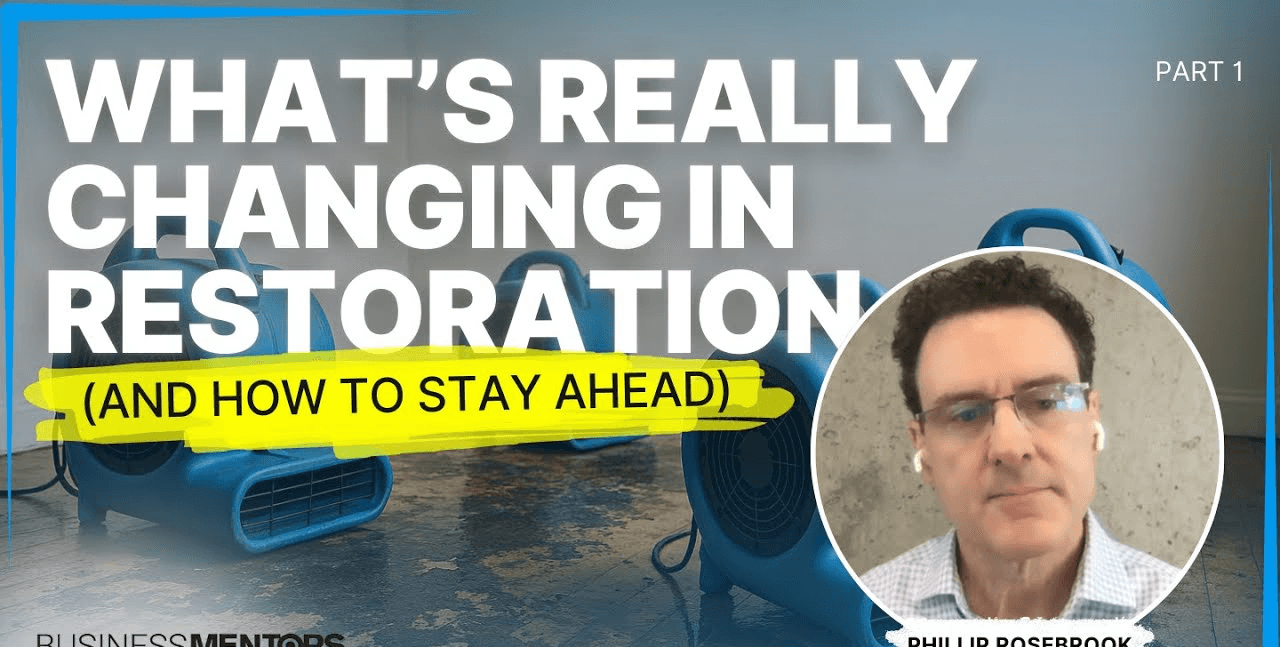
Watch the video on YouTube - Restoration used to be about fixing damage. Now it’s about juggling adjusters, carriers, clients, software, estimates, photos, compliance, platforms—you name it. What should be a straight-up job has turned into a tangled mess of tech, admin, and pressure from all sides.
I sat down with Phillip Rosebrook of Business Mentors to talk about what’s really changing in the industry—and what contractors need to stop doing if they want to keep their sanity (and margins). This isn’t theory. It’s what he’s seen on the ground for decades.
Mistake#1: Letting the Software Stack Run the Show
Phillip shared a story that pretty much sums up the mess: “I’ve got a client who was entering the same job into 12 different programs before even starting work.”
That’s not running a business. That’s getting run over by your systems.
“All of these things are supposed to solve problems. But instead, I’ve got chaos.”
Between franchise requirements, TPAs, insurance platforms, and internal needs—it piles up fast. And suddenly you’re paying for tools you barely use, and spending more time feeding software than doing the work.
Tip: Start by looking at outcomes. What are you trying to get done? Faster jobs? Smoother communication? Less rework? Then pick the few tools that actually help with that—and use them well.
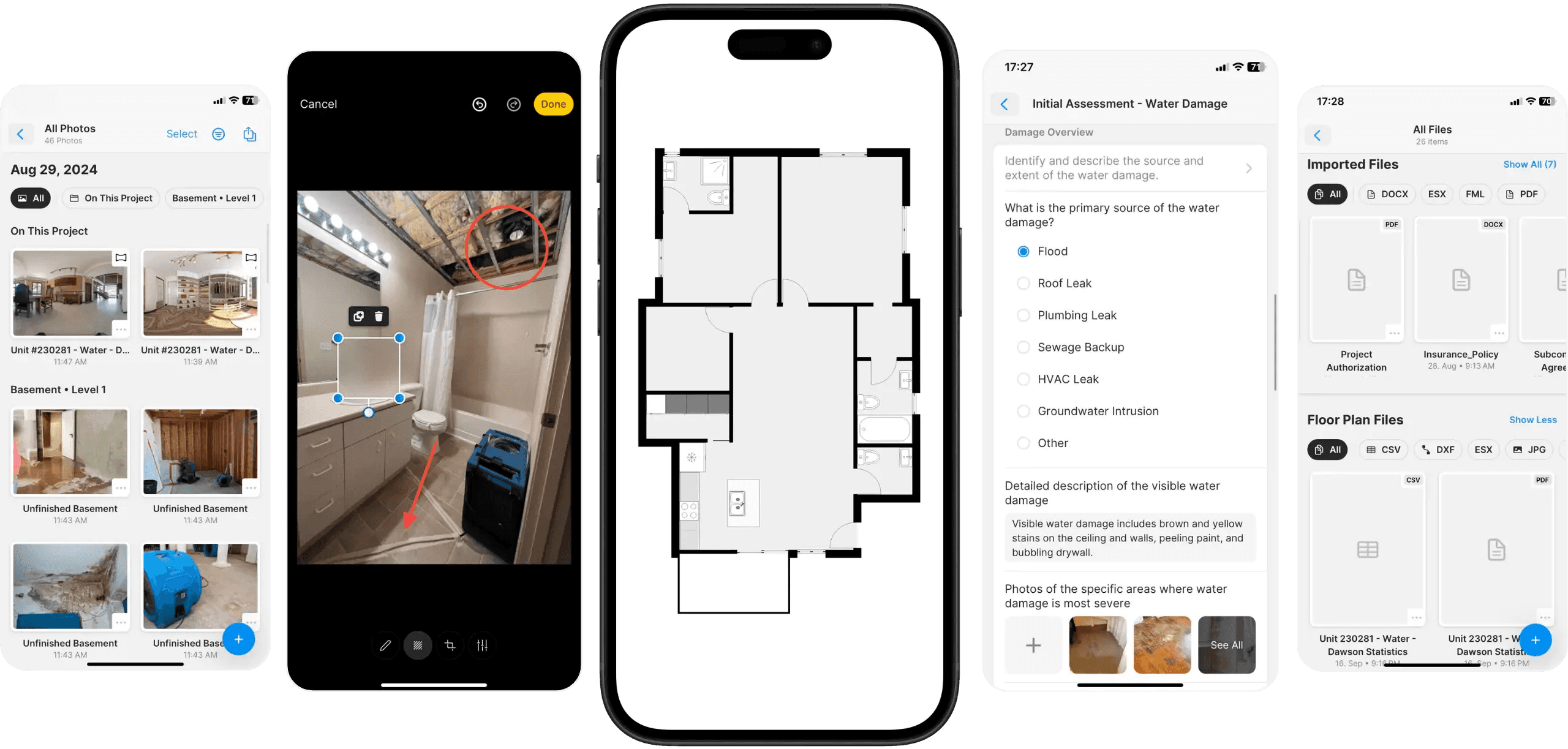
Tools like magicplan help here because they combine multiple functions in one workflow—sketching, documentation, photos, and estimating. That means fewer logins, less rework, and less time trying to stitch everything together after the fact.
Mistake#2: Chasing Insurance and Ignoring Your Own Clients
For years, restoration businesses have built their systems around what insurance companies want. But that’s shifting. Fast.
“Deductibles are going up. And more people are cashing out.”
That means more homeowners and property managers are paying out-of-pocket. And they don’t care about Xactimate line items. They want straight answers:
How much will it cost?
When will it be dry?
When can I move back in?
If you’re still talking to them like you’re reporting to an adjuster, they’ll find someone who isn’t.
Mistake#3: Marketing Too Narrowly
Phillip’s been telling contractors for years: don’t get more than 10% of your work from a single source. But too many shops still rely on one TPA, one carrier program, or one agent.
“When that dries up, you’re stuck. You’ve got to spread it out.”
He’s pushing folks to look at verticals:
HOAs
Healthcare
Municipalities
Hospitality
Education
But don’t chase everything. Pick one. Learn it. Show up at their events. Know what they care about. Become the go-to.
LEARN MORE: Best Ways to Get Water Damage Leads Without Wasting Money
Mistake#4: Ignoring What the Software Is Actually For
Most shops are paying for software they don’t really use.
“I bet most restorers are using 10% of 15 tools instead of 80% of 3 good ones.”
Your tech should do three things:
1. Help you scale without needing to hire every time you grow
2. Make jobs flow faster
3. Improve your profit
If it’s not doing one of those, ask why you’re using it.
Mistake#5: Thinking You Can’t Change Because of Franchise or TPA Rules
Yes—some stuff is locked in. Franchise platforms and program work have non-negotiables. But that’s not your whole book of business.
You still have control over the tools and systems that run your company. Don’t let required tools shape how you do everything else.
“Be strategic. Know what’s required—and know what helps you actually run your business.”
Mistake#6: Not Planning for Direct-to-Consumer Workflows
More folks are skipping claims. Or getting cash payouts. Or handling big deductibles.
“You’re going to see $20,000 water jobs paid out-of-pocket. So now what?”
If you’re not offering financing, not building clear estimates regular people can understand, not setting payment terms early—you’re going to feel it.
You’re no longer just working with carriers. You’re running a service business. Treat it like one.
Final Word: Make Tech Work for You, Not Against You
Phillip put it plain: software isn’t what we do. It’s how we do what we do. If your systems are getting in the way of the work, they’re not systems. They’re obstacles.
Start with your outcomes:
Faster jobs
Better margins
Fewer callbacks
Simpler communication
Then build your process and your toolset around that. Get the most out of what you already have. Learn the tools. Train your team. Use more than 10% of what you’re paying for
“Pick what works. Use it right. And stop letting software run your day.”
READ MORE:
Practical Tactics: How Small Restoration Companies Can Compete with Large Ones
Share

Andreas Boehm
CEO