Practical Guide to Understanding BIM and 3D Modeling
Business Tips
3 min read
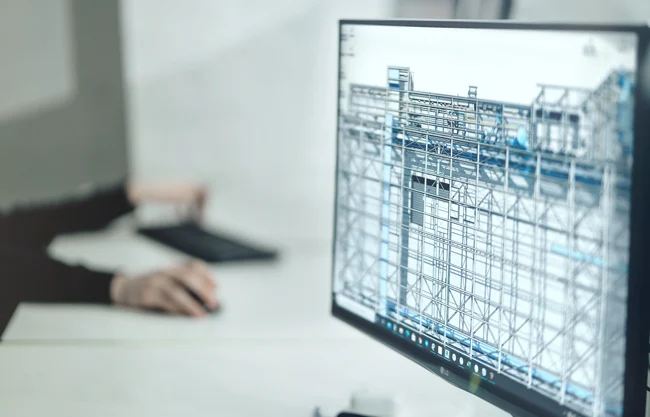
3D visualization is an incredibly powerful means of showing and explaining complex objects and spaces. In the construction business, the advancements in 3D-related technology have enabled architects and contractors alike to work more efficiently and provide clients with a better service. In this context, BIM (Building Information Modeling) and 3D modeling are often used interchangeably. However, while sharing the same principle, both serve different purposes. Let’s look at the difference between BIM and 3D modeling to better understand their use and benefits.
The power of visualization: 3D models for better outcomes in construction
3D models are used in a wide range of industries, including architecture, design, gaming, medicine, or industrial design. In a nutshell, they provide photorealistic representations of any type of object and space. This is achieved by collecting points in a three-dimensional space and linking them by triangles, lines, and curved surfaces. 3D models hence only capture geometry data about the object they visualize.
It is easy to see why they are so popular not just in construction but across the board in many professional applications. The photorealistic visualization creates a reality for things that helps the human brain see and think better. Such previews are incredibly valuable when it comes to assessing options, solving possible technological issues, or integrating designs. Basically, 3D modeling is an ideal tool when ideas and an aimed for result need to be visualized. And, of all industries, 3D modeling has probably had the most profound impact on how architecture, engineering, and construction (AEC) professionals work, enabling conceptualization in precise detail for ultimately better project management in construction or renovation work.
The power of information: BIM for smart processes
While the main purpose of 3D models is to provide a digital version of any given object, Building Information Modeling adds another dimension to the 3D visualization. This element can be seen in its name, i.e., information that turns BIM into an intelligent tool for building, operating, and managing buildings. It enables architects, engineers, real estate developers, and contractors to plan, design, and construct buildings within one 3D model which holds very detailed data on their structural properties. This includes anything from electrical systems to heating, ventilation or plumbing fixtures. On top of that, BIM 3D models provide technical data on each building material, as BIM objects, the components that make up a BIM model, are intelligent and store data. A wall, for instance, can thus, quite literally, start to speak about its extended parameters, such as strength, density, or porosity.
BIM technology also has a very strong collaborative element. The files containing the 3D models of physical and functional characteristics can be shared using IFC (Industry Foundation Classes), a globally used non-proprietary, neutral data format. This can be read no matter which of the many types of BIM software on the market is used by anyone involved in a project. When everyone has access to the same, up-to-date information, time and money can be saved and errors be avoided.
Using BIM and 3D modeling
Let’s recap and evaluate the characteristics of BIM and 3D modeling with a view to their appropriate use: Both are great tools for AEC professionals as they allow to optimize workflows and client services. They are, however, not interchangeable. 3D modeling creates realistic representations in three dimensions. This 3D model visualizes designs and a final result. BIM provides a representation of physical and functional details of a building in a 3D model.
BIM technology is mainly used for construction projects, particularly complex ones. Architects, civil and structural engineers, or professionals in the electrical and plumbing space deploy BIM software because it lets them anticipate issues as they come with building processes and enables them to manage design and construction processes more efficiently and work collaboratively throughout the entire project.
Benefits of 3D models
It is mainly the photorealistic representation that can be achieved with 3D models which has made this technology a favorite for visualizing construction design and architectural objects. From the perspective of contractors, working with digital drawing tools for floor plans with 3D model functionalities has immediate advantages because of the client benefits they provide. A three-dimensional representation is the best way of giving a client a very clear idea of the overall design and “look and feel” of a space, let’s say in the context of a remodeling project.
3D models enhancing the contractor-client relationship
Being able to show a model that reflects real dimensions enables clients to understand the project in its entirety and get a realistic impression of what can be done. It might sound quite basic but ultimately, it is all about 3D models making things easier for clients which will always be very much appreciated given the complexity of any kind of construction project. Not only can clients address issues of concern because they, literally, see them and thereby prevent mistakes but crucially, they are enabled to communicate with more ease and clarity. This can do away with a multitude of problems related to cost and timing that very often start with clients and contractors sometimes not speaking the same language. A 3D model therefore is a key tool providing benefits that go beyond mere technical capabilities for more precise planning. It puts the client-contractor relationship on a more solid footing from the start and contributes greatly to better outcomes by enabling more efficient and human-friendly processes.
Share
The power of visualization: 3D models for better outcomes in construction
The power of information: BIM for smart processes
Using BIM and 3D modeling
Benefits of 3D models
3D models enhancing the contractor-client relationship

Bernd Wolfram
CPO