Why IAQ Inspections Are a Profitable Service for Your Business ($$$)
Restoration
5 min read
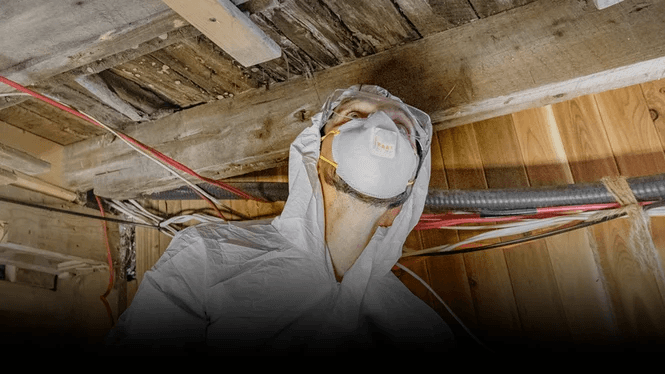
Are you looking to generate more revenue for your residential remodeling, renovation, restoration or HVAC business? Then consider adding indoor air quality (IAQ) inspections to your menu of services. We compiled the following list of questions and answers to help you learn more about this in-demand option.
Q. Why Is Indoor Air Quality Important to My Customers?
A. Homeowners want to know that their homes are clean and safe for daily living. However, they may be concerned that their indoor air quality is less than adequate. Perhaps they smell musty odors or see signs of mold. Maybe they have family members who are suffering from allergy symptoms, respiratory illnesses, fatigue, frequent headaches, or autoimmune diseases. They might be apprehensive about unseen threats, such as hidden mold or dangerous gases. Or, they may just be more hyper-aware of their indoor environment because they are practicing social distancing or working from home.
Q. What Can Affect Air Quality
A. The air within a home can be tainted by any of a number of pollutants. Frequently discovered indoor contaminates include:
Particulates such as dust and allergens
Mold
Formaldehyde
Carbon monoxide
Radon
Volatile organic compounds (VOCs)
A professional IAQ inspection is the only way to know, for sure, if and how a home’s indoor air is contaminated.
Q. Why Should I offer and Promote This Inspection Service
A. In addition to adding another source of business revenue, you will be demonstrating a sincere concern for others in your community:
When you supplement your core services with IAQ inspections, you can take pride in helping protect the health and safety of your customers. You may uncover problems that property owners have not unearthed on their own.
Also, if your company has been hired to perform remodeling or renovation work, an indoor air quality assessment will determine if your employees will be working in a safe environment. If you detect problems, you can recommend air quality remediation before work begins.
Q. Can I Offer Inspections Only, and Not Remediation?
A. Absolutely. In fact, the inspection and remediation steps are typically performed by separate companies. An inspection is simpler than remediation, and often lasts just one to three hours. If you find a customer’s home requires remediation, you can recommend the services of local remediation and restoration professionals. They will be specially trained to create and restore healthy indoor environments.
Q. How Is an IAQ Inspection Performed?
A. You will start a professional inspection by asking questions to find out if the homeowner has any obvious concerns. Then you will assess the homeowner’s entire dwelling and gather environmental data for every room. This can include the following steps:
Performing a visual inspection of general cleanliness and air-handling systems
Measuring the indoor temperature, relative humidity and carbon dioxide concentrations to evaluate the indoor-outdoor air exchange
Looking for visual clues of air quality problems
Closely examining areas that are susceptible to moisture and mold intrusion
Testing for worrisome particles, gases, VOCs and other types of indoor air pollution
The goal of the inspection is to identify any existing air quality issues that need to be addressed.
Q. What Tools Are Needed?
A. Various instruments are available for indoor air quality inspections, and include devices such as:
Air-sampling kits
Particle counters
Infrared thermometers and cameras that detect temperature differences caused by moisture
Moisture meters for detecting sources of excess moisture
Boroscopes used to see hidden mold problems inside walls
CO2 meters
Carbon monoxide analyzers
Radon detectors
VOC and formaldehyde meters
Also, some newer, high-tech hand-held instruments can take multiple IAQ measurements simultaneously.
Q. What Else Might I Need?
A. Other useful-to-have items include:
A camera for documentation
An LED flashlight and a backup battery
A telescoping mirror for examining tight spaces
One or more ladders
A toolbelt or a vest with multiple pockets
Safety glasses or goggles to protect your eyes
A respirator to protect your lungs
Sturdy shoes or boots with good traction
You can also benefit from a mobile app that allows you to produce a floor-plan sketch and an inspection report. Those are important steps.
Q. Why Is a Sketch Important?
A. You can add notes to the sketch to call out problem areas. This helps the homeowner understand any concerns that your inspection uncovered, and see the sources of air quality issues. A detailed sketch also can help guide a third-party remediation specialist who may be called in later.

Q. Why Is a Report Necessary?
A. Each customer will want to feel confident in the thoroughness and results of your work. And while your appearance, professionalism and inspection gear will help provide assurance, you need to provide a summary report as well.
The homeowner will place greater trust in you if you document what you did, justify why you did it, and explain any concerns with their home’s air quality. A good report will explain everything you did in both words and pictures (photos and floor-plan sketch) and will offer conclusions. If your inspection identifies problems that require remediation, you can recommend the type of remediation needed and also provide a list of local remediators to your customer. (For example, if mold is visible, it needs to be cleaned or removed professionally – with proper mold remediation containment and equipment – to prevent spreading of spores.)
Read more: How you can benefit from magicplan's new photo report feature in inspection.
Q. Do I Need Special Training and a Certification?
A. In order to investigate and resolve indoor air quality problems competently, you do need to complete proper instruction. A certification, while not necessary, adds extra reassurance that your services are top-notch.
There is no single, overarching IAQ accreditation. In fact, various companies and organizations offer courses and certification programs related to indoor air quality inspections. However, not all certifications are equal. Some are better than others. Research your options online and be careful to choose a reputable source. For example, the American Council for Accredited Certification (ACAC) is billed as “North America’s oldest and most prestigious certifying body dedicated to indoor air quality.”
You should also check out theIndoor Air Quality Association (IAQA)and the National Organization of Remediators and Mold Inspectors (NORMI). Both of these organizations offer educational resources and classes.
Conclusion
When homeowners want a comprehensive evaluation of their indoor air quality, nothing compares to professional IAQ inspections. So, look into this marketable service, and see if this might be the perfect way to expand your offerings and generate greater revenue!
Learn how to incorporate magicplan's inspection features into your operations in our webinar for restoration and remediation professionals
Or read how our customers Discreet Restoration, Warren Restoration and Crown Restoration benefit from magicplan.
Share
Q. Why Is Indoor Air Quality Important to My Customers?
Q. What Can Affect Air Quality
Q. Why Should I offer and Promote This Inspection Service
Q. Can I Offer Inspections Only, and Not Remediation?
Q. How Is an IAQ Inspection Performed?
Q. What Tools Are Needed?
Q. What Else Might I Need?
Q. Why Is a Sketch Important?
Q. Why Is a Report Necessary?
Q. Do I Need Special Training and a Certification?
Conclusion

Bernd Wolfram
CPO