Why and How to Maximize Air Movement During Water Damage Cleanup
Restoration
5 min read
Whenever you are performing in-place drying at a home or business, manipulation of air movement can be extremely effective. This guide is full of insights and tips that are beneficial for new technicians. But it’s also a helpful refresher for experienced technicians, too (especially the sections titled ‘Tips for Maximizing Air Movement’ and ‘Common Mistakes to Avoid’).
Why Air Movement Matters
After you extract all standing water at a job site (the first step to be tackled), two other tactics can be applied for successful drying: evaporation and dehumidification. Proper air movement will have a positive impact on both of these tactics:
Evaporation Enhancement – Increased air circulation is crucial for faster evaporation results. It helps by increasing the rate of moisture evaporation into the air, thereby reducing surface moisture that might cause damaging condensation and dangerous microbial growth.
Dehumidification Acceleration – Amplified air movement will encourage moisture trapped in furniture, carpets and other porous materials into the atmosphere, where it can be captured more efficiently by dehumidifiers.
In other words, air movement matters because it speeds up the drying process. And that is critically important. Water intrusion can cause significant damage to a property within 24 to 48 hours if not properly mitigated.
Types of Water Mitigation Equipment Needed
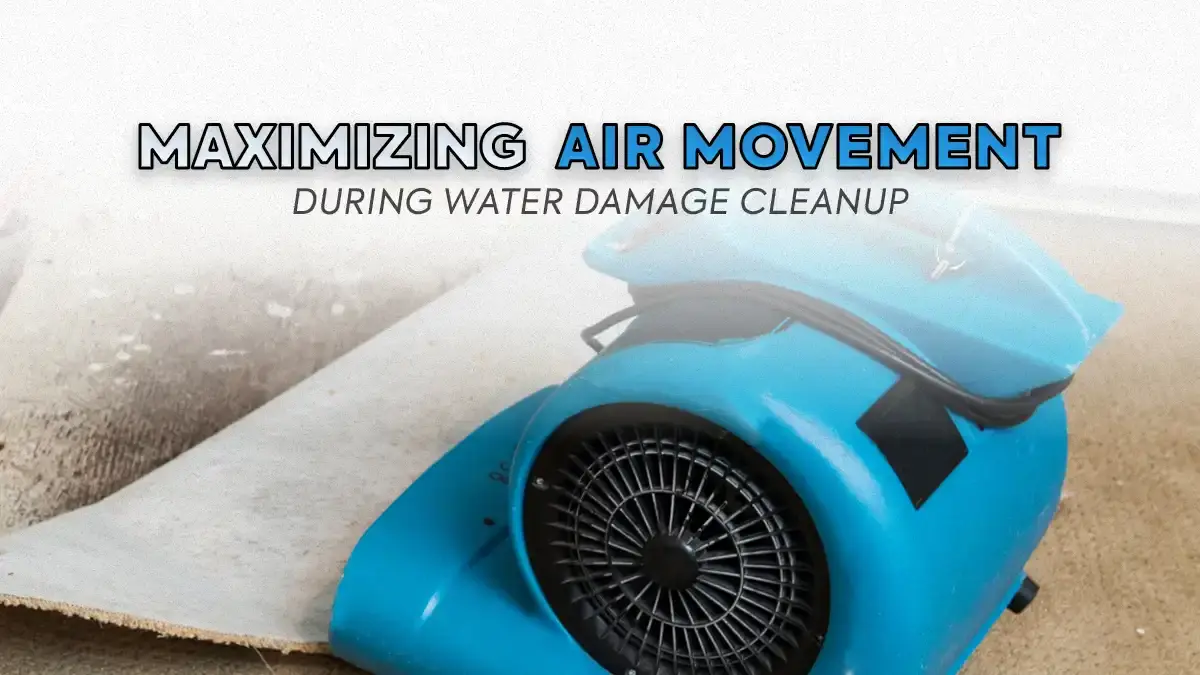
Air movement is achieved with various types of easy-to-set-up air movers, including the ones listed below:
- Centrifugal Air Movers are commonly used due to their high power, adjustability and focused airflow.
- Axial Air Movers are designed to move large volumes of air over a wide area.
- Compact Air Movers are smaller, portable versions of centrifugal and axial air movers, and they are designed for use in tight or hard-to-reach spaces.
- Low-Profile Air Movers are designed to fit in tight spaces while still providing substantial airflow (more than the output of a typical floor or desk fan).
- Carpet Dryers are specialized air movers designed specifically for drying carpets and the floor underneath.
Choosing the right type of air mover depends on the specifics of the drying job, including the size of the area, the nature of the materials being dried, any space constraints, and electric power availability. Also, some jobs will require more than one type of air mover.
Tips for Maximizing Air Movement
Start by Moisture Mapping Water Damage
Moisture mapping is essential for ‘determining the lay of the land’ at a water-damage job site. The easiest and fastest way to do this is to use a professional-grade floor plan app, such as magicplan. You can use your app to:
sketch a floor plan to scale
annotate areas of your sketch with humidity and moisture meter readings
add photos of the humidity and moisture meter readings
attach notes about your observations
include a 360-degree panorama of the space for reference

Use Psychrometry Principles to Develop a Drying Plan
Psychrometry is the art of measuring the moisture content of air. It is something that needs to be done before beginning a drying project, and it requires expertise and precision. So, it’s helpful to study psychrometry as part of your professional training. Then you will know how to apply psychrometric principles (use of specific measurements, charts and drying calculations) to determine the best drying plan for each new water-mitigation project. Good news: the data you collect with your floor plan app can be super useful for this step!
Use Your Floor Plan App Again for Reporting and Estimating
When your initial documentation is complete, use your app to generate and share a professional scope-of-work report. Then send your documentation directly to Xactimate® for estimating purposes. (A good app will allow you to complete both steps quickly and easily.)
Follow the Industry Standard for Optimum Drying
The 2021 compilation of the ANSI/IICRC S500 Standard for Professional Water Damage Restoration is widely regarded as the gold standard for water damage restoration businesses throughout the United States. However, in 2023, the IICRC began working on revising the S500 Standard. This revision process involves various stakeholders from the restoration industry, insurance industry, regulatory bodies, and other parties. The upcoming revision is expected to refine existing guidelines, address potential gaps, and integrate new research findings. So, be sure to stay informed about these updates, which will impact your future projects.
Place Air Movers Strategically in Relation to Other Equipment
Air movers can be used in tandem with commercial heaters and dehumidifiers to enhance the overall drying effect and efficiency. (Heater and dehumidifier placement must also be strategic.)
Common Mistakes to Avoid
Improper Placement of Air Movers
Randomly scattering air movers throughout a room will not guarantee a quick drying phase. In fact, it may even result in uneven drying and worsening water damage. Instead, you want to make sure air movers are placed strategically for adequate air movement. For example, in larger spaces, check to make sure enough air is flowing to the center of the room and not just around the perimeter. You may also need to make adjustments to ensure the air flow is targeting cabinets, closets, off-set nooks, and other moisture-trapped areas.

Not Scheduling Daily Monitoring
When you are using air movers for water-damage restoration, it is important to keep them moving. Daily check-ins will ensure that the units are running continuously. These regular visits will also prevent over-drying, which would be a waste of energy.
Overlooking Optional Remote Monitoring
Smart monitoring systems provide real-time feedback and alerts to allow more proactive job management. You can use these types of systems to prevent manageable issues from escalating into more significant problems.
Evading Equipment Adjustments
Air mover quantities, settings and placements may need to be adjusted, based on your ongoing assessments. This will help harness the maximum effectiveness of your equipment.
Not Documenting the Drying Process
Documentation is important because it will help you gauge the effectiveness of your drying process. It will also provide proof of your commitment and follow-through, so you can get paid in a timely fashion. And documentation is easy to create If you have a high-quality floor plan app. Use your app regularly to create dry logs for water mitigation, so you can record daily equipment usage and instrument readings.
Conclusion
Proper movement of air is essential during professional water-damage drying, for it can help reduce the drying time and prevent further damage. Take note of the tips mentioned above – and the list of common mistakes to avoid – to help optimize the work you perform.
NEXT:
Discover 3 Strategies for Efficient Estimating of Water Damage Mitigation Projects
Or Learn How to Use a Drying Chamber for Rapid Structural Drying
Share
Why Air Movement Matters
Types of Water Mitigation Equipment Needed
Tips for Maximizing Air Movement
Common Mistakes to Avoid
Conclusion

Bernd Wolfram
CPO