How to Become an Independent Adjuster: Here’s What You Need to Know
Claims Adjuster
4 min read
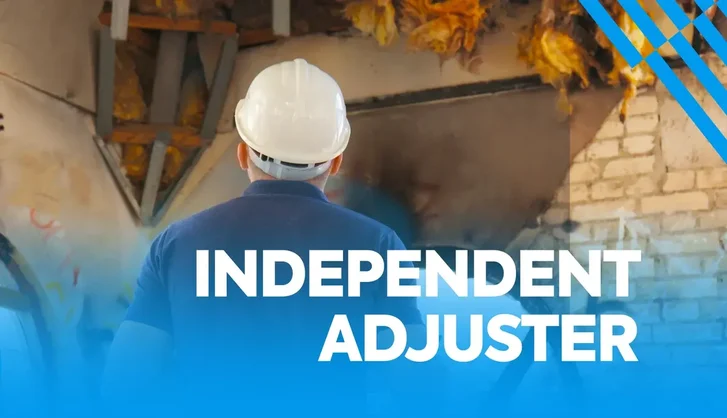
If you are interested in working in the insurance industry and you like the idea of freelancing, you may want to pursue a career in independent claims adjusting. In this type of role, you will be contracted by third-party, independent adjusting (IA) firms to investigate damage claims for insurance companies. This is often done when those companies’ staff adjusters are overloaded, or when claimants are in remote locations affected by natural disasters such as fires, floods, tornadoes and hurricanes.
In order to head down this career path, you need to know how to become an independent claims adjuster. And that’s what this article is all about. We have listed six key steps that will help you set the wheels in motion.
Step 1: Make Sure You Meet the Basic Requirements
In the United States, you need to be at least 18 years old, hold a valid driver’s license, own your own vehicle, be able to read and write fluently in English, and be able to move about freely to accomplish tasks in various environments.
Step 2: Decide If You Need Additional Education
A majority of claims adjusters have a college degree. So, if you already have an associate, bachelor’s or master’s degree, you are in a good position to pursue work as an independent adjuster. College graduates who completed an insurance degree program are particularly attractive to potential employers.
If you do not have a degree, you may want to consider earning one. This could help you stand out from non-college-educated job applicants. Yet, you should know that it’s also possible to become an independent adjuster with just a high school diploma or GED. This is especially true if you have previous work experience that helped you gain beneficial skills and knowledge.
Degree or no degree: Ultimately, that decision is up to you.
Step 3: Obtain Your Insurance Adjuster License
Whether or not you need an insurance adjuster license depends on the state where you live. If your state requires a license, you will need to obtain one to legally handle and close insurance claims. In order to do this, you should enroll in a preparatory course that can help you understand the information required to pass an insurance adjuster licensing exam. You may also need to apply for reciprocal licenses in the other states where you could be working as an independent adjuster. Also, be aware that some IA firms may require you to have a license – regardless of the state in which you are located – because it signifies that you demonstrate appropriate knowledge of your profession.
If you live in a state that doesn’t require a license, you can choose any other state as your “designated home state” for gaining a license.
When you are ready to obtain your first license:
Complete the pre-licensing prep course provided by your home state (or designated home state).
Pass the state’s required licensing exam.
Pass a background check, if required.
Submit your license application along with your payment for the licensing fee. (Note: application instructions and requirements vary by state.)
You may have to wait a few weeks to receive your license, especially if you’re applying in a state that has a high volume of applicants.
Step 4: Get Some Experience
If you already have experience working as a staff adjuster or working in some other related role – good for you! The more experience you acquire as an insurance-company employee, the more prepared you’ll be to work independently.
But what if you have no experience working in the insurance industry? Well, consider looking for an entry-level “claims specialist” (adjuster) position at an insurance company – either as a desk adjuster employed in-house or as a field adjuster working out of the office. In either role, you’ll want to learn all you can about the claims process and also network with others in your field. That way, you can get acquainted with the industry while also building your skills and knowledge and making valuable connections. Ideally, you will be recruited to enter a formal in-house training program for beginning adjusters. You may also have an opportunity to earn certain adjuster certifications that you can list on your résumé. (Certifications demonstrate extra knowledge in specialty areas.)
If you’re not keen on working for an insurance company, look at it this way: A staff position can be an ideal stepping stone to eventually working as an independent adjuster. Once you have gained some experience, you will be more confident and more prepared for launching your freelance career.
Step 5: Build Up the Required Skills
Having proficiency in these areas will help propel you to success as an independent adjuster:
Self-discipline – essential for working independently
Project Management – the ability to work on multiple claims simultaneously
Computer Skills – proficiency in typing and using certain independent adjuster software programs
Excellent Organization – since sloppiness can lead to costly errors
Attention to Details – especially important for identifying fraudulent claims
Recordkeeping, Time tracking and Invoicing – because you’ll be running your own business
Mobile Device Expertise – particularly use of job-related apps required in the field
Communication Etiquette – necessary for daily interaction with other people
Investigative Research – reviewing physical damage, police reports, medical records, etc.
Critical Thinking – analyzing and interpreting research findings, and crunching numbers
Written Communication – transmitting information clearly and effectively via emails, reports, etc.
Persistence – the ability to deal with unresponsive claimants and other issues
Self-promotion – willingness and ability to market your services steadily
Lead Generation – knowing how to actively work on attracting new business
Step 6: Learn to Use Helpful Tools
Of course, the types of tools you will need may depend on the kinds of claims you will be addressing. For example, if you will work as a home insurance adjuster who investigates property claims, you’ll want the following tools to scope losses:
A mobile device equipped with a high-quality camera
A Bluetooth laser distance meter for precise measurements
A mobile floor plan app that allows you to:
sync with your Bluetooth device
measure and sketch properties quickly for estimating purposes
create and send detailed reports with sketches and photos
store and access documents with cloud technology
send floor plan sketches directly to Xactimate® without no waiting time.
Conclusion
Becoming an independent adjuster will require some time, effort and dedication, as well as practice with appropriate tools. However, the overall process can lead to an in-demand, well-paying and very rewarding career. Want to learn more? Be on the lookout for our follow-up article: How to Land Work as an Independent Contractor.
Continue reading our guide on enhancing digital floorplans.
Or find out more about one dozen helpful tools for finding and documenting water damage.
Share
Step 1: Make Sure You Meet the Basic Requirements
Step 2: Decide If You Need Additional Education
Step 3: Obtain Your Insurance Adjuster License
Step 4: Get Some Experience
Step 5: Build Up the Required Skills
Step 6: Learn to Use Helpful Tools
Conclusion

Bernd Wolfram
CPO