How to Prevent Estimating Problems Caused by Incomplete Scopes
Claims Adjuster
5 min read
If you’ve ever wondered why your restoration estimates come back missing key line items — even when you think your field documentation is solid — you’re not alone. Across the industry, even the most diligent field technicians regularly omit important details from scopes, and the reasons are more nuanced than simple carelessness. In reality, the pressures and realities of field work create a perfect storm for costly oversights. The good news: with a few process tweaks and better communication between field techs and estimators, you can dramatically improve the accuracy and profitability of your jobs.
The Real Reasons Why Technicians Create Incomplete Scopes
It’s a common misconception that scope creators are just being sloppy when they miss line items or overlook details. In truth, most are highly capable professionals who are simply stretched too thin. They are often juggling multiple tasks, fielding urgent calls from adjusters, running out to job sites, or getting pulled into meetings. With so many distractions and competing demands, even the best scope developers can fall into a “good enough” mindset, roughing out a basic scope (that they may or may not amend later based on what they remember) and moving quickly to the next task.

Unfortunately, Small Oversights Add Up
You might think that a scope missing a few details is no big deal. But these small oversights add up fast. For example, if your company’s scopes consistently leave out garbage disposals in kitchen jobs, or fail to document the use of antimicrobial spray during mitigation, you’re leaving money on the table every single time. Over the course of dozens or hundreds of jobs, these missed line items can cost your company thousands of dollars in lost revenue and can even result in noncompliance with insurance carrier and industry standards.
But it’s not just about the money. Incomplete scopes can also slow down the approval process, cause disputes with adjusters, and create headaches for everyone involved — including estimators. They can only base estimates on what they know about. Consequently, if provided documentation is incomplete, the corresponding estimate will be as well.
Why Field Techs Hold the Key
Your company relies on field techs to be the “eyes and ears” on every job site. So, if their current scoping process is causing problems, the remedy is clear: Change the process.
Shift to a Simple, Proven Process for More Accurate Scoping
To bridge the gap between field documentation and accurate estimating, your field techs need a simple, structured and repeatable process. Here’s a three-step approach that works:
1. Scope Input: Field techs should document everything they see and do on-site that’s job-related, no matter how minor it seems. This includes not just the obvious details, but also details such as:
- Whether contents were moved to access affected areas (and how much time it took)
- If studs, subfloors or framing were cleaned during mitigation
- Whether antimicrobial was sprayed (and where)
- The presence of appliances, such as garbage disposals, dishwashers, or specialty fixtures
- Any unusual site conditions (contents in closets, areas behind furniture, etc.)
- Exact actions taken during mitigation (lifting carpet, pulling up carpet padding, etc.)
2. Thorough Review: Before submitting scopes, technicians should review their documentation to look for gaps or unclear notes.
3. Final Check: One final check should be performed to look for common omissions. Using a checklist can be helpful for this step. For example: Are all appliances noted? Was all initial mitigation work documented? Is the visual documentation thorough enough? Are there any ambiguous notes that need clarification (like a line item marked with an ambiguous letter “R”… which could be interpreted as either “Reset” or “Replace”)?
This improved process doesn’t have to be time-consuming. In fact, spending just a few extra minutes on site to document everything thoroughly can save hours of back-and-forth later, and can prevent costly missed line items.
Remember: The more explicit the documentation, the better the estimate will be.
The Case for Better Teamwork
Ultimately, accurate estimating is a team effort. The estimator can only work with the information they’re given, and the field tech is the only one who truly knows what happened on site. By building a culture of thorough documentation and effective communication, you can close the gap between the field and the office.
The best way to do this is to invest in employee training and invest in advanced technology.
How Technology Can Transform Scoping
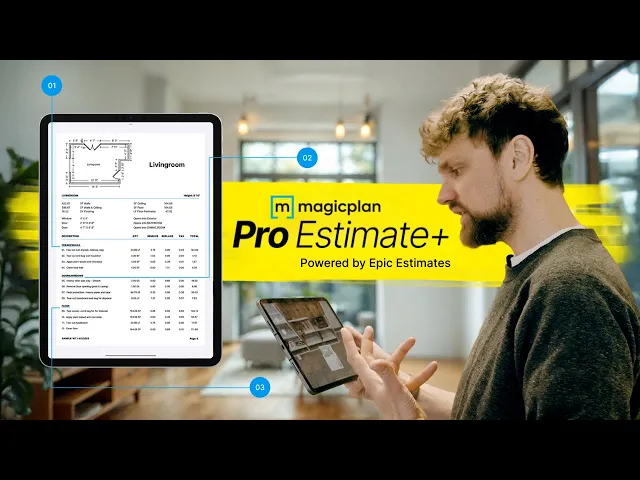
One of the most effective ways to improve the scoping process is to equip your technicians with a digital field app designed for restoration work. For example, the magicplan Pro Estimate+ allows technicians to build scopes quickly and cleanly, thanks to these powerful functions:
Visual Documentation: Techs can collect video and photo documentation that actually help estimators spot what’s been done. Visuals can include various angles, room-wide shots, and pictures of any areas where content was moved or materials were cleaned.
360° Panoramas: These help estimators catch what typical photos miss, such as garbage disposals, electric switches, and miscellaneous contents.
Sketching + Notations: Techs can sketch room layouts and annotate unusual conditions that might affect estimating, such as contents in closets or hidden areas behind furniture.
Forms:The app allows for the collection of exact data on mitigation actions, such as antimicrobial spraying or content manipulation, so your restoration estimator isn’t left guessing.
Standardized Data Capture: By using magicplan to build repeatable workflows for your field team, you help them avoid leaving out key details during scoping.
Quick Sharing of Each Field Report: This helps your office-based estimator kickstart the process of writing an estimate, whether it’s a fire, mold or water damage estimate. Plus, magicplan even integrates seamlessly with Cotality and Xactimate estimate software to ensure precise estimating.
With the right technology, you can train your field team to document everything in real time, so nothing gets overlooked, left to memory or lost in translation.
Conclusion
The challenge of incomplete scopes is not a matter of carelessness, but a natural result of busy field techs and estimators working under pressure. By understanding the root causes — distraction, incomplete documentation, and communication gaps — you can take practical steps to fix the problem. Train your field techs to create and share high-quality documentation, and furnish them with a digital tool that makes the whole process seamless and effective. As a result, you’re certain to see more complete estimates, fewer disputes, and a stronger bottom line.
Is Your In-House Estimator Overwhelmed by a Huge Workload?
Here’s a great solution: Let your field techs use the magicplan Pro Estimate+ (Powered by Epic Estimates) app to scope some jobs, and then let us create the estimates. You can send any scope to magicplan and get a ready-to-go, carrier-compliant restoration or mitigation estimate built by an expert using Xactimate or Cotality software. Schedule a call with our sales team today to learn more about this unique service.