How to Document Fire Investigations Effectively
Claims Adjuster
4 min read
If you're a fire investigator or an adjuster involved in fire damage claims, you know how crucial the first few hours after a fire are. Your job is to figure out what happened. Was it accidental? Or perhaps something more sinister, like arson? The answers often lie in the details. And to get those details, you need proper documentation. This guide breaks down why you need to focus on visual elements like floor plans and photos, especially when dealing with fire damage insurance claims and arson investigations.
Layout of the Site: The Role of Floor Plans in Fire Investigations
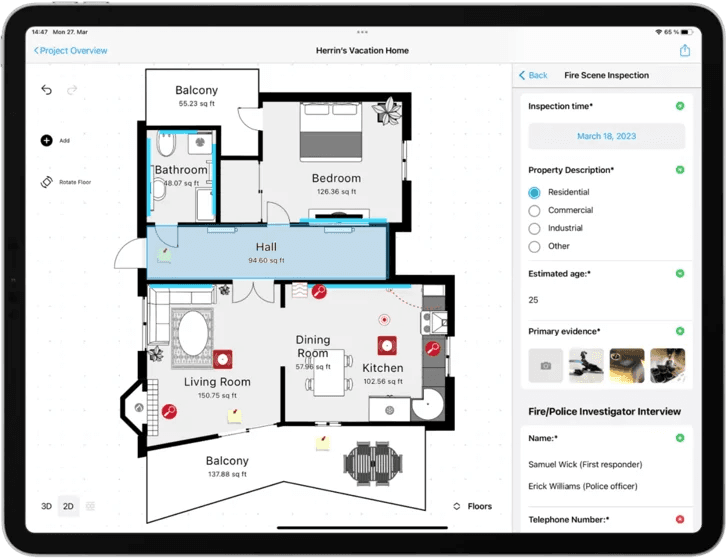
Let's start with floor plans. If you're a fire investigator, a floor plan is your best friend. It shows the layout of the fire scene. This is key for understanding where and how the fire started and spread. It's also useful for fire damage restoration efforts. A good floor plan takes the guesswork out of the scene for everyone involved.
Gathering Evidence: Photos and Notes in Fire and Arson Investigations
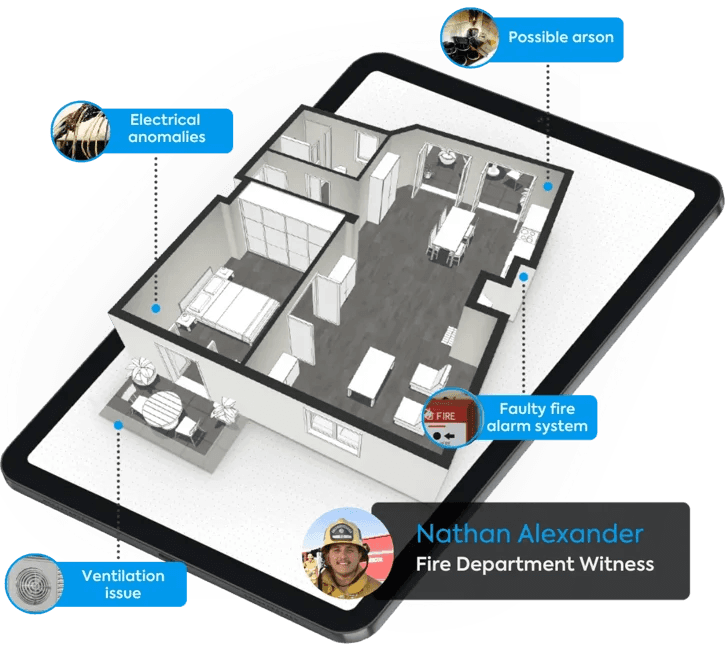
Next, let's talk about photos and notes. They're essential, whether you're compiling an arson report or just dealing with smoke damage cleanup. Take lots of pictures, inside and outside. Capture everything from burnt furnishings to structural damage. And don’t forget to jot down notes. These can provide extra context that photos alone might miss.
Streamlining Data Collection with magicplan: Custom Forms and Attributes
Data collection needs to be standardized, especially for something as serious as an arson investigation. That's where magicplan comes in handy. This fire investigation report software lets you create custom forms for data collection. You can add different types of questions and even include photos.
For specific items within your floor plan, you can use Custom Attributes. This ensures that you capture all relevant details, from the source of ignition to depths of char and distinct burn patterns.
Exporting and Sharing: The Final Steps in Fire Damage Assessment
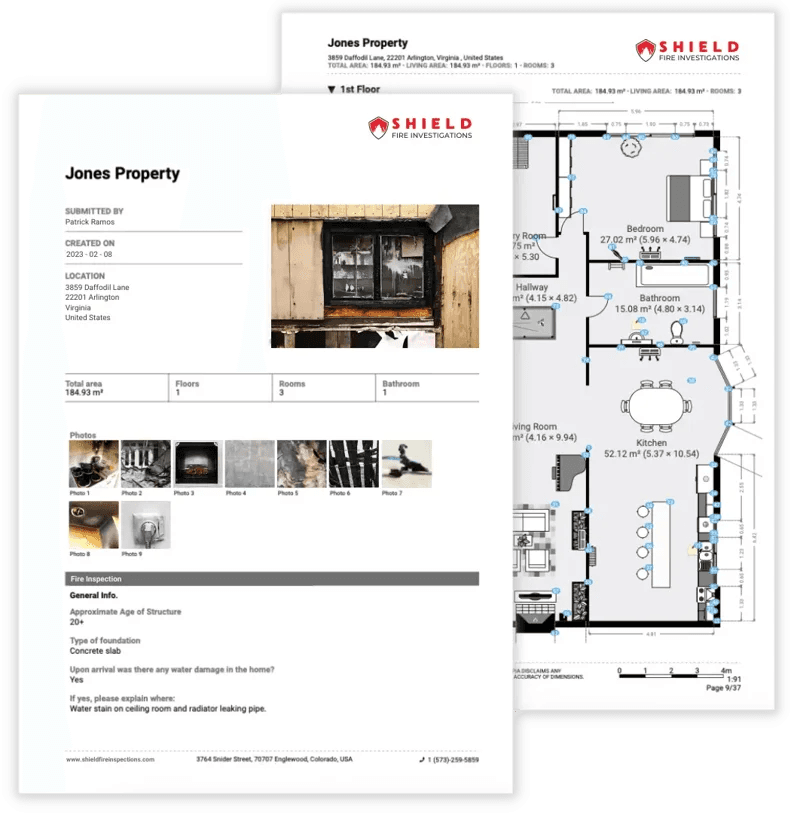
After you've got all your evidence, it’s time to compile it. Create a comprehensive fire investigation report in a PDF format. This report is what you'll share with insurance adjusters, legal authorities, and others involved in fire damage cleanup. It’s also important for resolving fire damage insurance claims. Make sure it’s easy to read and understand, so everyone gets a complete picture of the incident.
Conclusion
Fire investigation is a complex process. It involves multiple steps from safety measures to witness interviews and, of course, visual documentation. Tools like magicplan make the process easier and more efficient. Whether you're into fire damage restoration, dealing with fire damage insurance claims, or diving deep into arson investigations, a detailed fire investigation report is your end goal. And for that, proper documentation is key.
Interested in taking your fire investigation skills to the next level? Consider integrating magicplan into your toolkit.
Share

Benjamin Brown
Director of Sales Acquisition